


Ahead of the

ByteRay provides next-generation product security through an integrated ecosystem of autonomous products, tailored to the requirements of each deployment.

Designed to protect every layer of what you build, ByteRay bridges offensive security and automated defence. Powered by Argus, our multi-agent orchestration architecture, the ecosystem coordinates specialised autonomous agents across source repositories, embedded firmware, and third-party binaries without source access.

ByteRay does not stop at detection. Our products generate context-aware patches, run rigorous regression tests, and produce board-ready reports in hours. Across the security lifecycle, ByteRay acts as a central liability safeguard, supporting evidence-backed regulatory compliance and continuously hardening your digital assets.

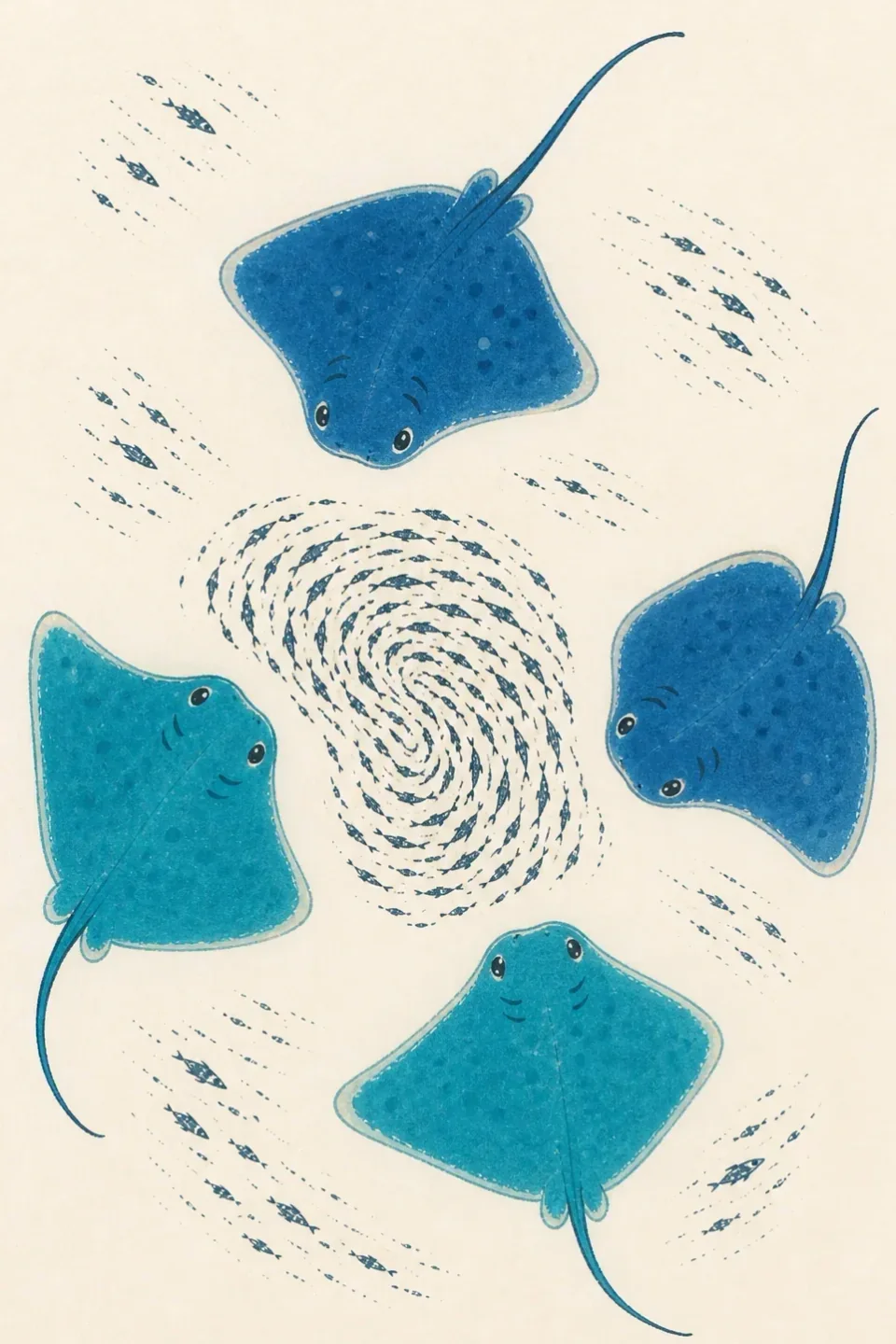
Young stingrays hunting a school of fish, seen from above.

ByteRay

Unbeatable reliability under the hood—let them wonder how you pull it off.

Complete product security on autopilot. It autonomously reasons over every layer, including raw design plans, configs, firmware, closed-source binaries, and encryption. It finds and fixes vulnerabilities before they ever reach production.

Product security that outpaces AI-assisted adversaries.

Argus Systems: heterogeneous multi-agent product security

Argus closes the loop from unknown vulnerability to shipped fix. It is neither a scanner nor a language model left to guess. It is a different kind of system: a deterministic spine of program analysis, on which a heterogeneous set of agents reasons. The spine builds a queryable model of the product, computes data flow and reachability, and holds the ground truth; the agents propose hypotheses, chase variants, generate proofs and write repairs against it. Probabilistic where judgement is needed, deterministic where proof is required.

The agents are not copies of one generalist. Each is built for a distinct task, with its own tooling and reasoning strategy, and an orchestration layer schedules, parallelises and cross-checks their work across the whole product. Argus operates on source in any language, on compiled binaries and firmware with no source at all, and on device configuration. One sweep covers every relevant weakness class in a single pass: a sweeper, not a hunter chasing one lead.

The agents:

Teacher
Builds and continuously updates a threat model of your specific product, so every other agent reasons about your attack surface rather than a generic checklist.
Vulnerability Researcher
Finds unknown vulnerabilities across all CWE classes and exposed secrets, in source and in binaries, with source-to-sink evidence for every finding.
Variant Hunter
Given one confirmed bug, closes the entire class across the codebase. You fix the pattern, not the instance.
PoC Generator
Produces a working, reproducible proof of concept for each finding. If it cannot be triggered, it is not reported.
Automated Program Repair
APR generates fixes automatically, without human intervention, then tests each patch rigorously against the PoC and your existing behaviour before it reaches a reviewer.

Findings arrive as a verified exploit, a root cause, a class-wide fix and a test, in a form your engineers can merge. Delivered via CI/CD, a console, or connectors to the platforms you already use.

Xpsd

open-source reachability for scanner noise

Sits on Grype, Trivy, OSV-Scanner, Snyk or any SARIF report and decides, by reading your source, which reported CVEs are actually reachable in your tree. Verdicts land in the GitHub Security tab. Built for teams preparing for CRA-era vulnerability handling. Open source.

View Xpsd on GitHub (opens in a new tab)

Drifter and the Drift Corpus

one-day intelligence from closed-source patches

Drifter diffs vendor patches to extract the vulnerabilities they silently fix, so you know what a Patch Tuesday actually changed before attackers do. The Drift Corpus is our open dataset of 240+ Windows kernel patch analyses with assembly, vulnerability class, root cause and debugger breakpoints.

Loom

the product model underneath

Loom is a polyglot source and binary indexer that turns a product into a queryable database. It is the reason Argus can answer "where else does this pattern exist" instantly instead of re-reading the code. Available as a standalone query layer for teams who want to ask their own questions.

View Loom on GitHub (opens in a new tab)

Relic

declarative static analysis

Relic is a static analysis engine built around one idea: turn source code into a relational database, then ask questions of it with declarative queries. Precise, repeatable, and cheap to run across a whole estate.

Published, patched, and on the record.

Every claim on this page is backed by a public advisory, a vendor acknowledgement or an upstream commit. We publish our agents' findings under coordinated disclosure at pop.byteray.co.uk, with severity, timeline and fix. As of this writing: 177 advisories, 3 critical, 79 high, 159 still under embargo.

A stingray traces a buried break through concentric ocean-record rings and leaves a verified repair trail.

Selected findings, all discovered autonomously by Argus

Why this matters to you

None of these products lacked security review. OpenBSD, EDK II, OP-TEE and U-Boot are among the most scrutinised codebases in existence. If a 27-year-old authentication bypass can sit in OpenBSD's kernel, the honest question is not whether your product has similar bugs. It is who finds them first.

Method, in one paragraph

Argus treats model output as a hypothesis, not a finding. A vulnerability reaches the report only when deterministic program analysis holds a source-to-sink trace and a reproducible proof of concept confirms it. A repair is delivered only after it breaks the PoC and preserves the existing test surface. The result is evidence-backed prioritisation rather than an alert queue.

177advisories on the public record today

Full Proof of Possession register (opens in a new tab)

Stingrays swimming inside a circular ocean current, darker water held outside the ring.

Liability Safeguard

Standard supply-chain security products dump endless alerts on your desk, but reachability analysis cuts through the noise by proving which vulnerabilities are actually dangerous in your hardware and software execution paths. By pairing this exploitability proof with Automated Program Repair (APR), you move from passive threat logging to a closed-loop engine—shrinking MTTR from months to minutes and handing auditors verifiable, auto-patched proof of compliance.

  1. EU Cyber Resilience Act (CRA)

    The mandate
    Fix reachable vulnerabilities immediately and deliver automated, secure updates across the product lifecycle.
    How you solve it
    Eliminate false positives with reachability proofs and automatically generate deployable patches to hit strict compliance deadlines.
  2. NIST SP 800-218 (SSDF)

    The mandate
    Prioritize and remediate software flaws based on actual operational exposure and real-world risk.
    How you solve it
    Produce hard proof of whether a flaw is reachable and auto-repair vulnerable code paths before release to validate your risk prioritization.
  3. FDA Medical Device Cybersecurity

    The mandate
    Guarantee that third-party code, firmware, and binaries do not compromise clinical performance or device safety.
    How you solve it
    Trace execution paths directly into closed-source binaries to prove actual impact, patching critical flaws without breaking system functionality.
  4. ISO/IEC 29147 & 30111

    The mandate
    Establish a rapid, verifiable pipeline for investigating, resolving, and distributing fixes for reported security flaws.
    How you solve it
    Automate the entire chain from exploit proof to patch generation, resolving flaws continuously without manual engineering overhead.